How Makhana Is Harvested in Bihar: The Wetland Craft
By Aamir Raza (Mr Makhana) · 7 October 2026
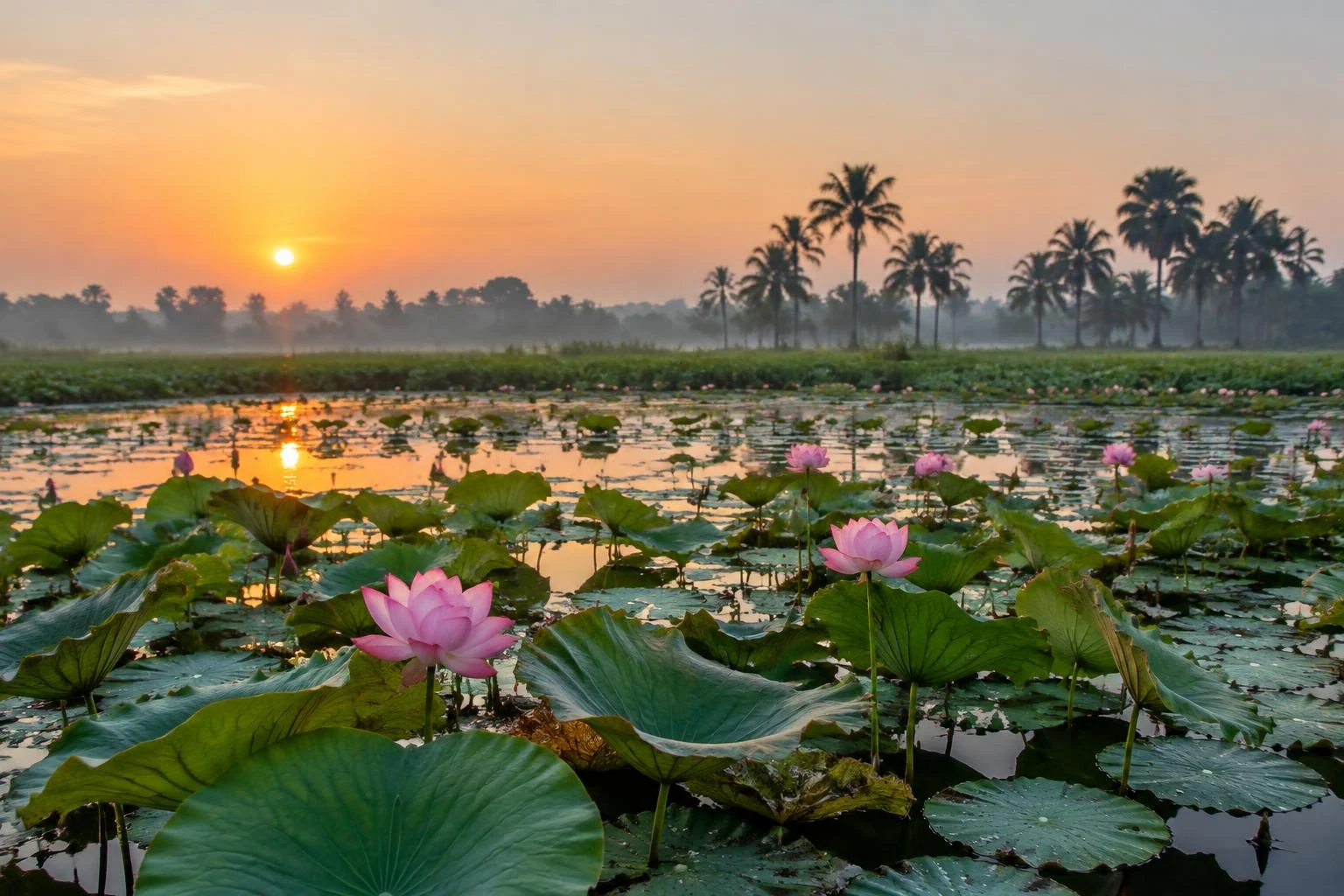
A look at the traditional makhana harvest in Bihar’s Mithila wetlands — the seasons, the hand skills and the care behind every handful.
A crop that lives in water
Unlike most snack crops, makhana grows entirely in water. Euryale ferox spreads broad, spiny leaves across the surface of ponds and wetlands, and its flowers and fruits form just above and below the waterline. When the fruit ripens it bursts, and the seeds sink to the bottom of the pond. That simple fact shapes the whole harvest: the seeds must be collected from the pond bed itself.
Why Bihar?
North Bihar has a landscape full of ponds, seasonal wetlands and slow rivers. Warm summers and a monsoon that refills the water bodies create conditions the plant thrives in. Just as important is the people: villages in the Mithila region have built deep practical knowledge of the crop over many generations, and that know-how is a large part of why Bihar makhana has its reputation.
The seasons of makhana
Timing varies with the weather and the farming method, but in broad terms the plant is established earlier in the year, flowers and fruits through the warm months, and seeds are gathered once they have settled to the pond floor. Some farmers grow makhana in traditional ponds, while others cultivate it in shallow field systems that are easier to manage. Either way, the crop asks for patience.
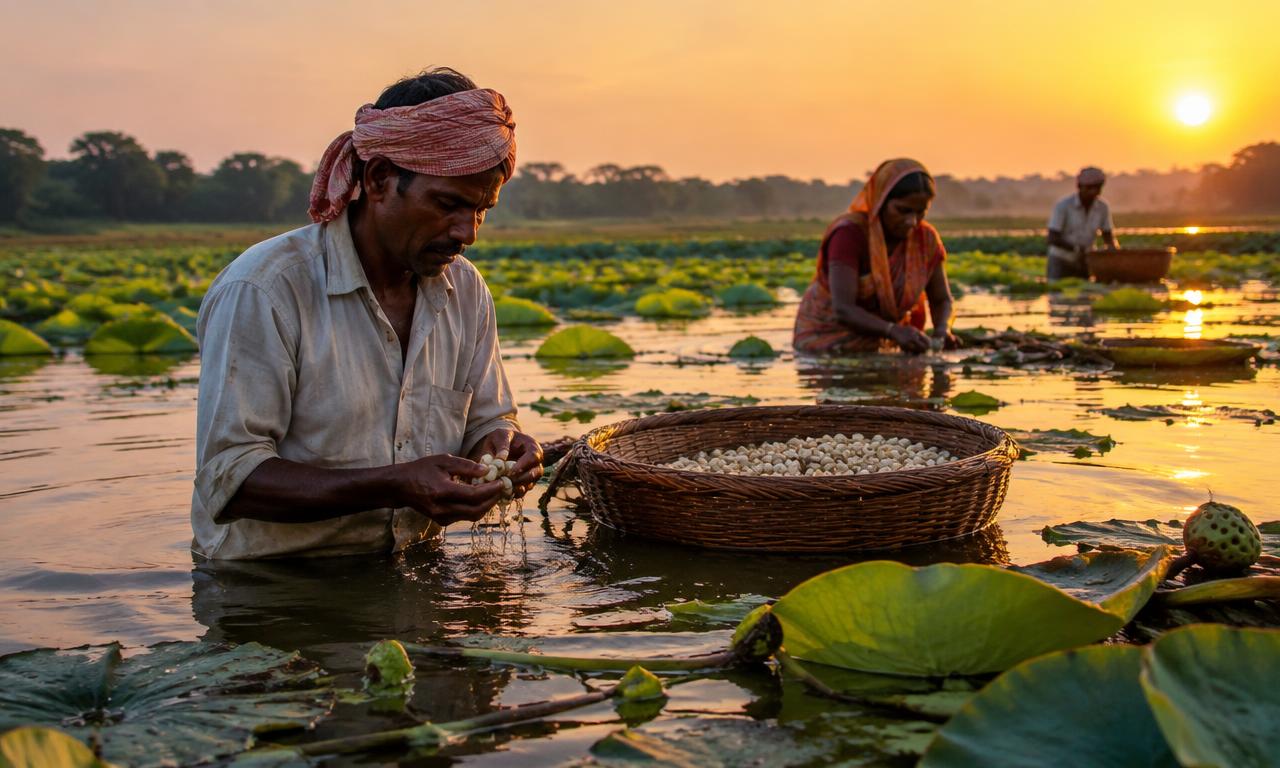
Gathering the seeds
Harvesting is skilled, physical work. Workers move through the water, gathering the seeds from the soft bed of the pond, often using simple tools and baskets. The seeds come up mixed with mud and plant matter, so they are washed and sieved right away. What looks simple takes experience: knowing where seeds have collected and how to gather them without waste.
Drying, grading and roasting
Once clean, seeds are sun-dried until their moisture is right for roasting. They are then sorted into size groups, because seeds of similar size heat evenly. Roasting happens in batches in large pans. At the right moment the hot seeds are struck so the hard outer shell cracks and the kernel puffs into makhana. Judging that moment is the heart of the craft — too early and the seed will not pop well, too late and it scorches.
Hand skill and quality
Because so much of the process is manual, quality depends on care at every step: clean water, patient drying, accurate grading and an experienced hand at the roasting pan. Sorting after popping removes broken or discoloured pieces and groups the rest by size. Larger, whiter, whole pieces are typically sold as premium grades.
Respecting the people behind the crop
Every pack of makhana carries hours of human work. As a brand rooted in Bihar, Munch Misty wants that heritage to be visible — in how we talk about our product, in how we select it and in the long-term relationships we hope to build across the supply chain. Specific sourcing and origin details are shared with business buyers in their quotations.
Bringing Bihar makhana to the world
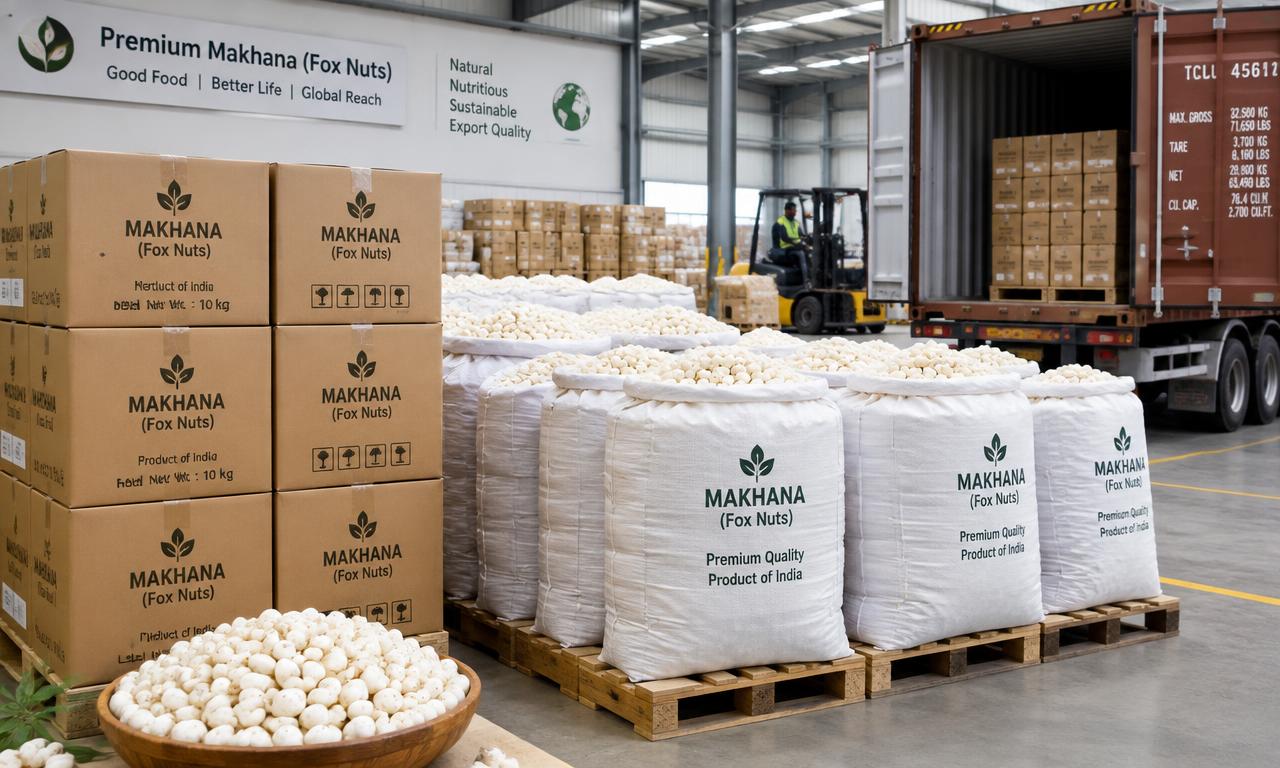
Interest in makhana keeps growing well beyond India, from the Gulf to Europe, North America and Southeast Asia. If you are a distributor, importer or retailer who wants to offer authentic Bihar makhana, we welcome a conversation. Use the inquiry form below to share your market, volume and packaging needs.
Frequently asked questions
Is makhana harvested by hand?
Traditionally, yes. Seeds are gathered from the pond bed and processed with a great deal of manual work.
Which part of Bihar is known for makhana?
The Mithila region of north Bihar is closely associated with makhana cultivation.
Talk to Munch Misty
Questions about this topic, samples or a quotation? Send us your details and our team will reply.